
“They get the shot, that night they have a fever of a hundred and three, they go to sleep, and three months later their brain is gone. This is a holocaust, what this is doing to our country.”
 |
| Source: James Gathany, Judy Schmidt, USCDCP |
Thimerosal is a vaccine preservative. Since the early 20th century, small amounts of thimerosal have been used in vaccines to prevent the growth of fungi and bacteria. Thimerosal is mainly composed of ethylmercury. When we hear concerns of mercury toxicity (for example, with the consumption of fish), we are primarily concerned about the compound methylmercury.
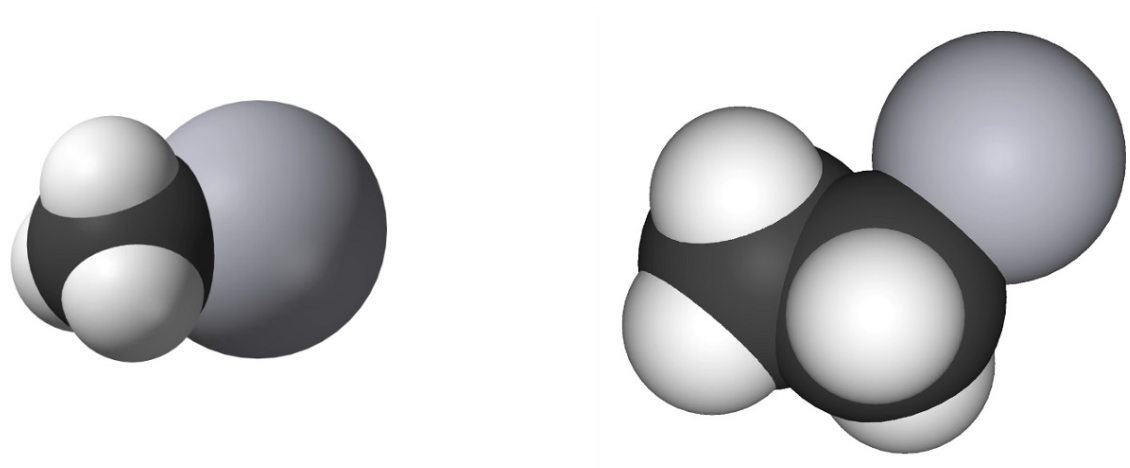 |
Methylmercury (left) and ethylmercury (right). Image source: Wikimedia Commons (public domain)
|
Many independent epidemiological studies over the last two decades have concluded that the low doses of thimerosal in vaccines are not harmful to infants, and the compound is not present in routine childhood vaccination schedules in the U.S., E.U., and several other countries. All this said, the current scientific consensus is that there is no compelling evidence linking vaccinations and autism; mercury poisoning does not resemble autism, and rates of autism diagnosis continue to rise despite the removal of thimerosal in many vaccines.
Furthermore, there is no evidence to suggest that the American Academy of Pediatrics' recommended immunization schedule is harmful, or that young children's bodies can't "handle" it. Spacing out vaccines only increases the amount of time by which children are vulnerable to contracting vaccine-preventable diseases. The parents' choice to delay their children's immunizations is what caused the measles outbreak in Disneyland in 2015, with nearly 150 cases.
It's estimated that the MMR (measles, mumps, and rubella) vaccine has saved 17.1 million lives worldwide since 2000. Herd immunity is important for the health of the entire community, as not all children can be vaccinated or will respond satisfactorily to immunizations.
Further reading:
- Centers for Disease Control: Understanding Thimerosal, Mercury, and Vaccine Safety
- Centers for Disease Control: Immunization Schedules for Infants and Children
- Dorea et al.: Toxicity of ethylmercury (and thimerosal): a comparison with methylmercury (J Appl Toxicol 2013; 33:700-11)
- Flaherty: The vaccine-autism connection: a public health crisis caused by unethical medical practices and fraudulent science (Ann Pharmacother 2011; 45:1302-4)

